
The History and Origins of Kubba Halab
Kubba Halab is one of the most distinctive dishes in Iraqi cuisine and a unique variation of the broader Middle Eastern dish known as kibbeh (or kubba in Iraqi Arabic). While kibbeh is widely known across the Levant in countries like Lebanon and Syria, Iraq has developed its own diverse family of kubba dishes, each with regional variations, cooking methods, and ingredients.
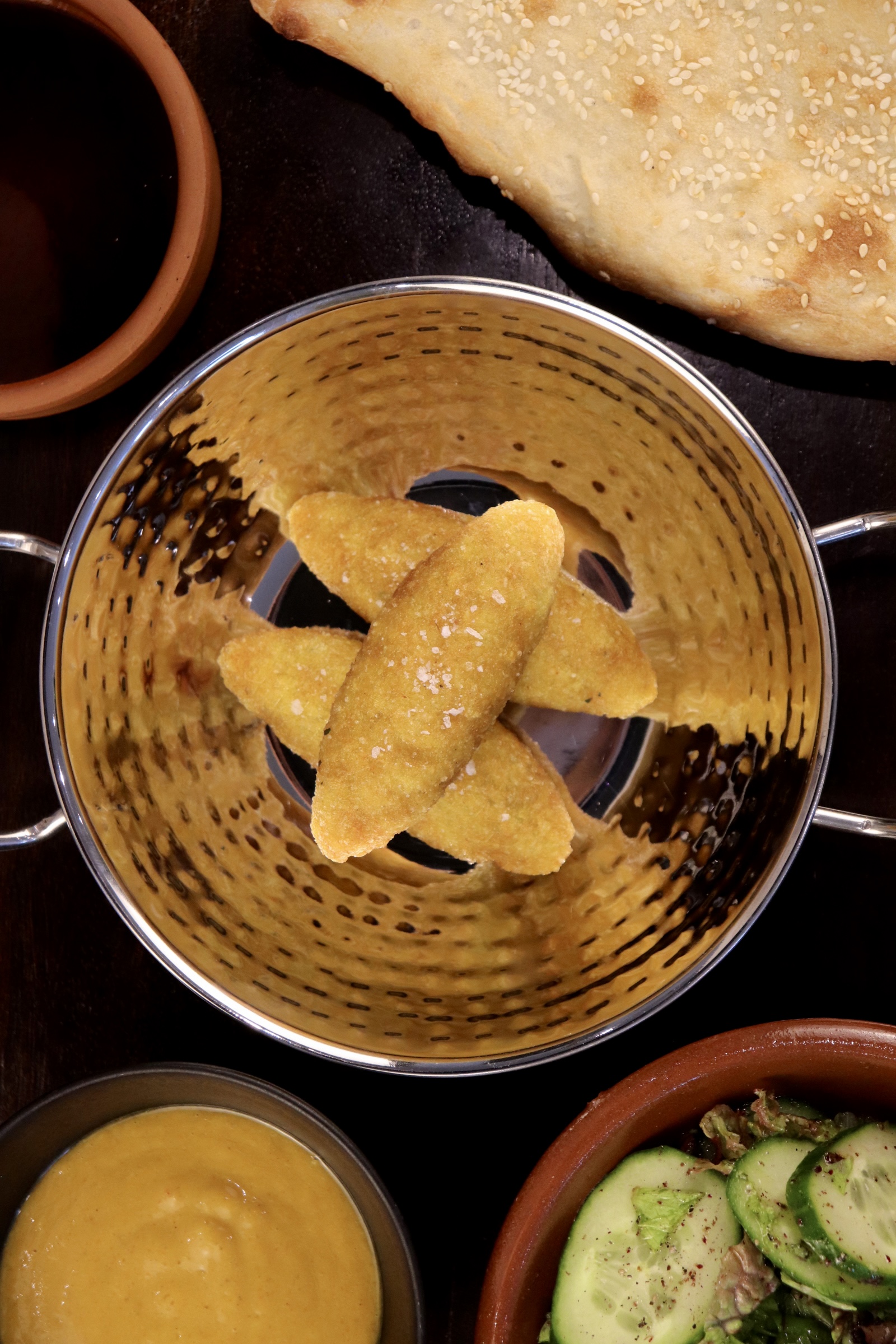
Kubba Halab is especially recognisable for its crispy rice shell filled with spiced lamb, onions, herbs, and raisins. Unlike many versions of kibbeh that are made with bulgur wheat, this Iraqi variation uses rice dough, giving the outer shell a light golden, crunchy exterior once fried.
The name “Halab” refers to the historic city of Aleppo (Halab in Arabic) in present-day Syria. For centuries, Aleppo was one of the most important trading hubs in the Middle East, linking Iraq with the Levant, Anatolia, and Persia. As merchants travelled these trade routes, culinary traditions spread across the region and dishes evolved as they were adapted to local tastes and ingredients.
Kubba Halab reflects this history of cultural exchange. While inspired by the wider kibbeh tradition found throughout the Middle East, the Iraqi version developed its own identity through the use of rice rather than bulgur and the addition of sweet elements such as raisins.
Kubba in Iraqi Cuisine
Kubba is deeply embedded in Iraqi culinary culture and is considered one of the country’s most important traditional foods. Iraq actually has more varieties of kubba than almost any other country in the region, with recipes varying by region, cooking method, and ingredients.
Some well-known Iraqi varieties include:
- Kubba Halab – fried rice kubba filled with lamb
- Kubba Mosul – large, flat kubba stuffed with meat and baked or pan-fried
- Kubba Hamuth – kubba cooked in a tangy tamarind-based soup
- Kubba Shorba – kubba served in a rich broth
Kubba Halab is particularly popular as a snack, street food, or appetiser, thanks to its crispy exterior and flavourful filling.
The Traditional Rice Used in Iraqi Kubba
One important ingredient often associated with traditional Iraqi cooking—including kubba—is Iraqi Amber rice, also known as Anbar rice. This premium long-grain rice is grown mainly in southern Iraq, particularly in the province of Najaf.
Amber rice is famous for its distinctive sweet aroma and slightly sticky texture, which makes it ideal for shaping rice dough used in dishes like kubba. When cooked, it releases a fragrant scent that many Iraqis instantly recognise as the smell of home cooking.
Historically, Amber rice was widely used in Iraqi kitchens for dishes such as dolma, rice pilafs, and kubba, because its natural stickiness helped bind ingredients together while maintaining a soft texture.
Why Amber Rice Is Difficult to Find in the West
Despite its importance in Iraqi cuisine, Amber rice is difficult to source outside Iraq, particularly in Western countries. Several factors contribute to this scarcity.
First, production levels of Amber rice have declined significantly over the past few decades. Iraq once produced large quantities of the grain, but water shortages and agricultural challenges have reduced domestic rice farming. Because Amber rice requires large amounts of irrigation, farmers have increasingly shifted to crops that demand less water.
Second, government restrictions and export limitations have also played a role. Much of the remaining production is prioritised for local consumption within Iraq, meaning only small quantities make it into international markets.
Another factor is its strong fragrance, which requires careful storage and transport to preserve quality. This makes large-scale export more complicated compared with more common rice varieties.
As a result, many Iraqi cooks living in Europe, the UK, and North America substitute Amber rice with other types of short- or medium-grain rice that can mimic its texture.
Adapting Kubba Halab Outside Iraq
Because authentic Amber rice can be difficult to obtain in the West, many recipes for Kubba Halab adapt by using alternative rice varieties. I’ve tested many different types to see which works best, but most of them were either complete failures or very difficult to handle. I tried basmati, Thai glutinous rice, rice pudding rice, sella rice, and Egyptian rice. I haven’t tried jasmine rice, though I know some people do use it.
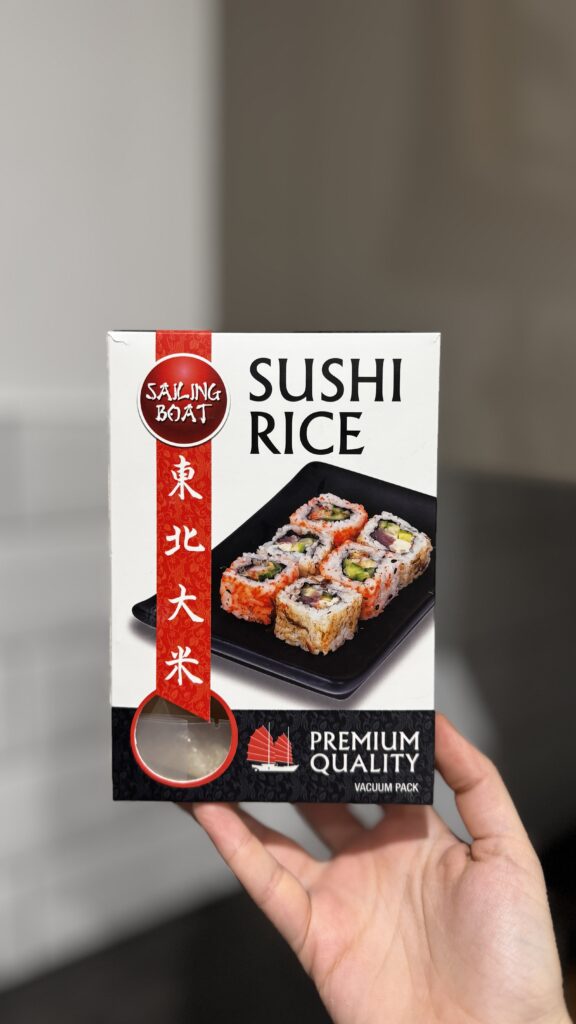
At this point, I think I’m done experimenting with different rices. Honestly, I’m really happy with the results using sushi rice. It allows you to form a thin shell that doesn’t crack, and it’s much easier to work with (especially when your hands are wet).
I’ve also tried making kubba halab without potato — don’t do it! The potato is key to achieving a light, airy shell with a beautiful crisp. Using only rice results in a very firm casing that’s harder to shape thinly and much more difficult to work with overall. Good kubba should be light, have a crisp crust, break open easily, and give a satisfying crunch.
The Flavour Profile of Kubba Halab
The filling inside Kubba Halab is what gives the dish its deep and aromatic flavour. Minced lamb is cooked with onions and a blend of warm spices, including:
- 7 spice for warmth and depth
- Curry powder for complexity
- Paprika for colour and subtle sweetness
- Black pepper for mild heat
- Cardamom for fragrance
Fresh parsley adds brightness, while raisins introduce bursts of sweetness that contrast beautifully with the savoury lamb. Pine nuts are sometimes added for texture and richness, though they remain optional in many family recipes.
This combination of sweet and savoury flavours is a hallmark of many Iraqi dishes.
The Art of the Rice Dough
The rice shell used in Kubba Halab requires careful preparation. The rice is soaked and rinsed thoroughly before being cooked slowly until very soft. Turmeric is often added, giving the dough a gentle golden colour.
A boiled potato is then combined with the rice and passed through a grinder to create a smooth, uniform dough. The potato helps bind the mixture together and improves elasticity, making it easier to shape the kubba.
After kneading, the dough is allowed to rest so that it becomes less sticky and easier to handle.
Shaping and Frying Kubba Halab
Once the dough is ready, small portions are rolled into balls and hollowed out to form thin shells. A spoonful of the cooled meat filling is placed inside before sealing and shaping the kubba into smooth ovals or slightly pointed forms.
The kubba are then left to air-dry briefly before cooking, which helps remove excess moisture and improves their texture when fried.
Kubba Halab is deep-fried or shallow-fried in very hot oil until golden brown. The result is a crispy outer layer with a soft interior and fragrant lamb filling.
How Kubba Halab Is Served
Kubba Halab can be served in several different ways. It is often enjoyed with tangy sauces that complement the rich fried shell, such as:
- Amba sauce, a tangy Iraqi mango pickle sauce
- Tamarind sauce, adding sour depth
- Date sauce, offering a sweet contrast
Another popular way to enjoy kubba is as a sandwich in Iraqi samoon bread, filled with lettuce, tomatoes, pickles, and sauces.
Kubba Halab
Ingredients
Meat filling
- 500 g minced lamb
- 1 bunch parsley
- 2 onions
- 1 tsp curry powder
- 1 tsp 7 spice
- 1 tsp paprika
- 180 g raisins
- 50 g pine nuts (optional)
- 1 tsp black pepper
- 1 tsp cardamom
- 1.5 tsp salt
Dough
- 2 cups sushi rice wash till water is clear and soak in water for 20mins
- 2 medium (310-315g) maris piper potatoes
- 2 tsp salt
- 1/2 tsp turmeric
- 532 ml water
Instructions
Preparing the filling
- Finely chop the parsley and white onion.
- Heat a large pan over medium heat and add the minced lamb. Cook until browned, breaking it up as it cooks.
- Add the chopped onion and cook until soft and translucent.
- Stir in the curry powder, 7 spice, paprika, black pepper, and cardamom. Mix well.
- Add the parsley, raisins, and toasted pine nuts (if using), and cook for another 2–3 minutes.
- Taste and adjust seasoning if needed, then remove from heat and allow the filling to cool completely.
Preparing the rice shell
- Rinse the Sushi Rice thoroughly until the water runs clear.
- Soak the Sushi Rice in water for 20mins.
- Add 2 cups of rice to a pot, then pour in 532ml of boiling water and 2 tsp salt and 1/2 tsp turmeric. Cover and cook on very low heat for 20 minutes.
- Peel the potato, cut it into chunks, and boil until tender. Approximately 20-25mins.
- Pass the cooked rice and potato through a meat grinder to create a smooth, uniform dough.
- Combine the mixture well with your hands until it becomes smooth, cohesive, and easy to shape. It will be quite sticky and slightly gummy — this is normal. Coating you hands in water is key to working comfortable with the rice mixture.
Forming the Kubba
- Keep a small bowl of cold water nearby and wet your hands constantly to prevent sticking.
- Take a 40-45g portion of the rice dough (about the size of a golf ball).
- Roll it into a ball, then use your wet thumb to create a hollow in the centre, gently shaping it into a thin shell.
- Add a spoonful of the cooled filling inside.
- Carefully seal the opening and shape into a smooth oval or slightly pointed kubba
- Repeat with the remaining dough and filling, keeping your hands damp as you work.
- Place the formed kubba on a tray lined with parchment paper.
- Let the kubba air-dry for 30 minutes to remove excess moisture before freezing or frying.
Frying
- You can shallow fry or deep-fry the kubba—make sure the oil is very hot.
- Fry for 4-4.5 minutes, then remove once golden. Be careful, as kubba can develop dark patches quickly.
Time to eat
- Dip the kubba in amba sauce, tamarind sauce, or date sauce, or enjoy it as a sandwich in an Iraqi samoon with pickles, lettuce, tomato, and your choice of sauces.