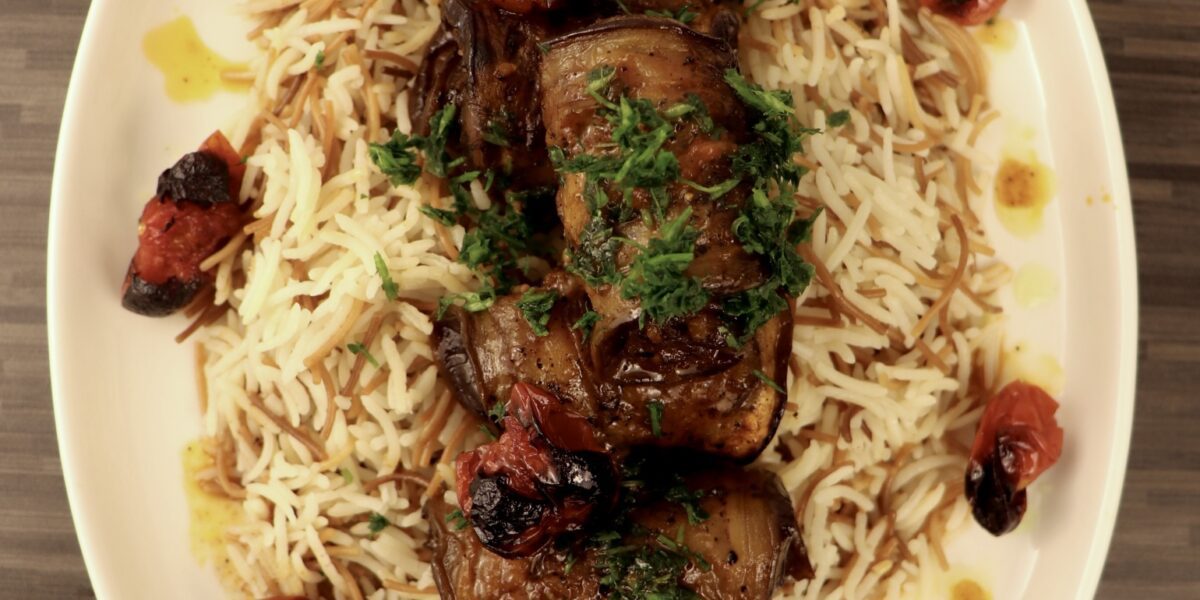
My husband has always insisted he doesn’t like aubergines — the only exception he’s ever made is for makdous (my recipe for makdous is posted here: https://shakumaku.co.uk/makdous-preserved-stuffed-aubergine/). So when he came home from an Iraqi family friend’s house saying he’d tried tepsi, a traditional Iraqi aubergine tray bake, and actually loved it, I was shocked. Tepsi is one of the most popular comfort foods in Iraq — a rich baked dish made with aubergines, potatoes, tomatoes, and spiced minced meat cooked together in a tray. Naturally, I had to make it myself… and yes, he admitted it was delicious.
What does tepsi mean?
One of the most surprising things about tepsi is that the name has nothing to do with the ingredients. The word tepsi simply means “tray” or “baking tray.” The dish is literally named after the cooking vessel rather than what goes inside it.
This reflects a wider tradition in Middle Eastern cooking where dishes are sometimes named after their cooking method rather than specific ingredients. In the case of tepsi, everything is layered into a large tray and baked together in the oven.
In Iraqi cooking, tepsi usually refers to a tray filled with fried aubergines, potatoes, tomatoes, onions, and seasoned minced meat, all baked in a rich tomato sauce. As it cooks, the vegetables soften and absorb the sauce, creating a dish that’s deeply comforting and full of flavour.
Where does tepsi originate from?
Tepsi is widely recognised as a traditional Iraqi dish and is a staple in many households across Iraq. While tray-baked vegetable and meat dishes exist throughout the Middle East, the particular combination of ingredients used in tepsi makes it strongly associated with Iraqi cuisine.
Interestingly, the word tepsi itself comes from Ottoman Turkish and spread across the region during the time of the Ottoman Empire. It simply means tray or platter, which is why you’ll hear similar words used across several cuisines in the Middle East, the Balkans, and parts of Central Asia.
What region of Iraq does tepsi come from?
Tepsi is most closely associated with Baghdad and central Iraqi cooking, although it’s enjoyed throughout the country today. You’ll sometimes even hear it referred to as Baghdadi tepsi.
Like many traditional home-cooked dishes, it’s not limited to just one city or region anymore. Over time it has become a national comfort food with small variations depending on the household.
Some families add peppers, some adjust the seasoning in the minced meat, and others layer the vegetables slightly differently. As with many beloved dishes, everyone tends to believe their family’s version is the best.
Why are the aubergines fried first?
One of the key steps that defines tepsi is frying the aubergines before they go into the tray. It might seem like an extra step, but it’s actually essential to the final flavour and texture of the dish.
Frying the aubergines helps to:
- soften their texture
- remove any bitterness
- allow them to absorb the tomato sauce more effectively
This step gives the aubergines that silky, melt-in-your-mouth texture that makes tepsi so satisfying. Without frying them first, the dish would taste completely different.
Were potatoes always part of tepsi?
Although potatoes are now a very common ingredient in tepsi, they weren’t always part of the dish.
Some food historians believe potatoes were added later, once they became more widely used in Middle Eastern cooking. Traditionally, aubergines and tomatoes were the main vegetables used in the dish.
Today though, potatoes are almost always included because they make the dish more filling and soak up the rich tomato sauce beautifully.
When is tepsi eaten?
Tepsi is considered classic home-cooked comfort food in Iraq. Rather than being reserved for big celebrations, it’s the kind of dish families grow up eating regularly.
Many Iraqis describe it as nostalgic because it reminds them of meals cooked by parents or grandparents. It’s hearty, filling, and ideal for feeding several people at once.
The dish is usually served with rice and sometimes bread, with simple sides like salad, pickles, or yoghurt to balance the richness of the tomato sauce and fried aubergines.
Because it’s baked in a large tray, it’s perfect for sharing — the kind of meal that brings everyone to the table.
What makes tepsi distinctly Iraqi?
Although tray-baked dishes appear across the Middle East, tepsi stands out because of its specific combination of ingredients and preparation style.
The layers of fried aubergines, potatoes, minced meat, and tomatoes create a flavour profile that’s strongly associated with Iraqi home cooking. As the dish bakes, everything softens and blends together, producing a rich tomato-based sauce and tender vegetables.
It’s simple food, but deeply comforting — the kind of dish that reflects the warmth and generosity of Iraqi family meals. And if you’ve ever thought you didn’t like aubergines, tepsi might just be the dish that changes your mind.
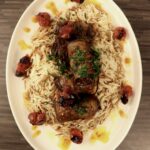
Iraqi Tepsi Recipe (Easy Oven-Baked Eggplant and Meat Casserole)
Ingredients
- 3 aubergines
- Oil to brush
- Pinch of salt
- 1 bunch cherry tomatoes
Meat mixture
- 500 g minced lamb
- 1 onion squeeze out the liquid from the onion using a cheesecloth
- 1 bunch parsley
- 1 tbsp dried mint
- 1 tbsp paprika
- 1 tbsp black pepper
- 1 tbsp garlic powder
- 1 tbsp onion powder
- 1 tbsp flour
- 1 tsp salt
Cooking sauce
- 3/4 cup hot water
- 1/3 cup pomegranate molasses
- 1 tbsp ground noomi basra/black dried lime
- 1 tsp ground cinnamon
- 2 tbsp tomato puree
- 1/4 cup olive oil
- 1 tsp black pepper
- 1 tsp salt
- 1 lemon
Instructions
Preparing the aubergine
- Slice the aubergines into medium-thick rounds or lengthways slices. Lightly salt them and set aside for 20–30 minutes to draw out excess moisture and reduce bitterness. Pat dry with kitchen paper.
- Brush the slices with oil and oven-roast the aubergine slices at 180 degrees until lightly golden on both sides approx 10-15mins. They don’t need to be fully cooked, just softened and slightly coloured. Set aside.
Preparing the meat mixture
- Mix all the meat mixture ingredients in a bow and set aside.
Assembling the dish
Baking
To Serve
- Lay a slice of baked aubergine flat on a clean surface. Spoon a layer of the raw meat mixture on top, then gently roll it up.
- Place each rolled aubergine into a 9×13 inch baking dish, arranging them snugly so they hold their shape.
- Once all the rolls are in the dish, scatter the cherry tomatoes over the top. We want them to roast whole so they become soft, sweet, and slightly blistered during baking.
- In a separate bowl, mix all the cooking sauce ingredients together until fully combined, then pour the sauce evenly over the dish, making sure it seeps into all the gaps.
- Preheat the oven to 180°C (350°F).
- Cover the dish tightly with foil and bake for 45 minutes, allowing the meat to cook through and the flavours to develop.
- After 45 minutes, remove the foil. Switch the oven to fan setting with grill on and bake uncovered for another 10–15 minutes, until the top is slightly charred and caramelised.