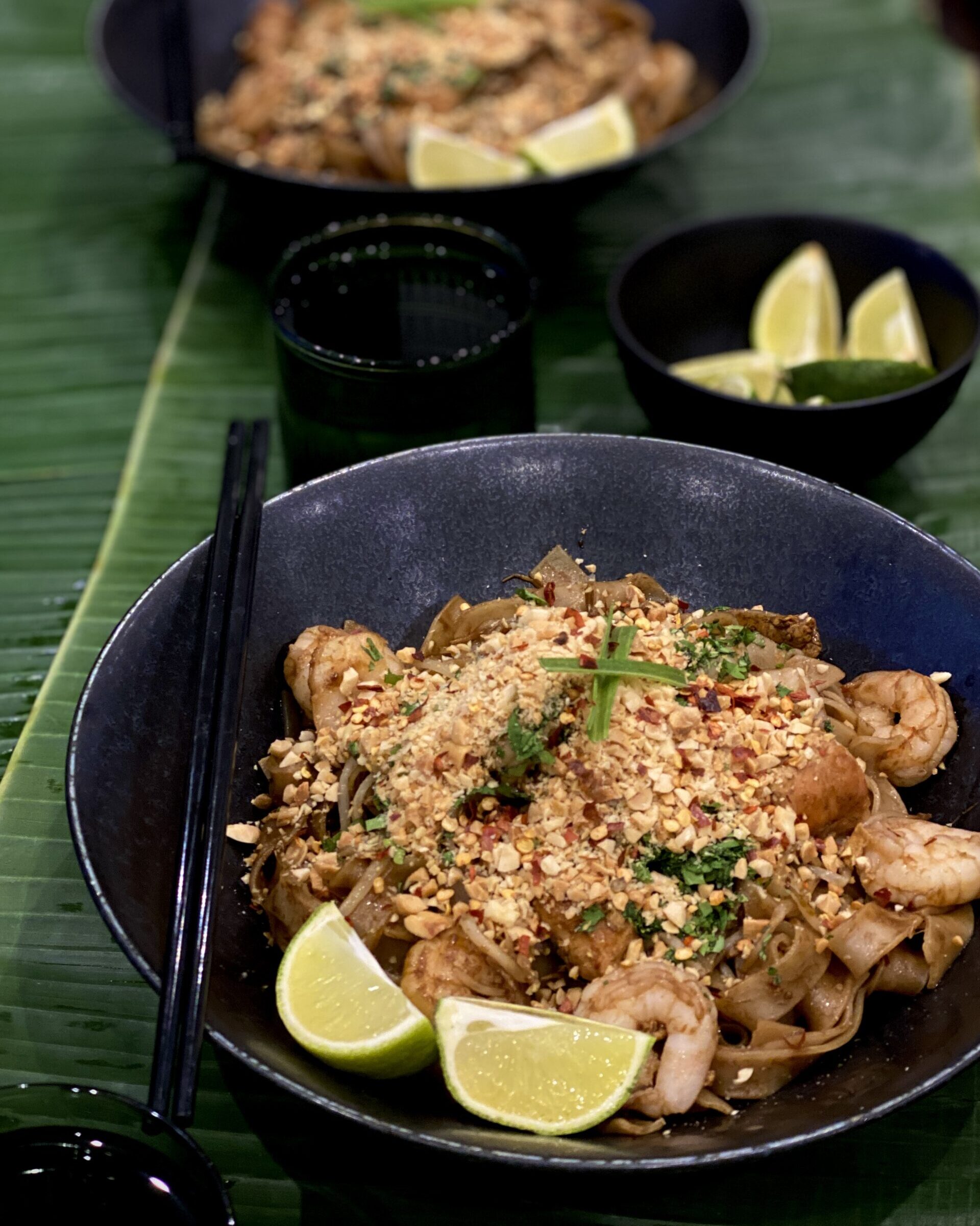
Pad Thai Recipe: What Is Pad Thai, History & How to Make It at Home
Pad thai is one of the most iconic Thai noodle dishes in the world, and if you’re searching for a pad thai recipe or wondering what is pad thai, you’re not alone. This Thai street food classic is known for its perfect balance of sweet, salty, sour, and savoury flavours, made with stir-fried rice noodles, tamarind sauce, eggs, and peanuts.
It’s the kind of dish that instantly converts people into Thai food lovers—and it did exactly that for me.
The first time I ever had pad thai was at the King’s Cross markets, right beside Waitrose, at a stall called Khanom Krok. I can still remember it so clearly. It was one of those spontaneous food stops that completely stays with you. The noodles were smoky from the wok, tangy from tamarind, slightly sweet, and finished with crunchy peanuts and fresh lime. It was honestly soooo good. I went back again… and again. I was obsessed.
Naturally, I had to recreate it at home.
My husband, like me, had never really been exposed to Thai cuisine before. But pad thai changed everything for us. It very quickly became a household must-have—one of those comforting yet exciting meals that somehow feels both familiar and new every single time you eat it.
What does pad thai mean?
The name “pad thai” literally translates to “Thai-style stir-fried noodles.”
- Pad = stir-fried
- Thai = Thai-style
Simple, direct, and exactly what it is.
Is pad thai authentic Thai cuisine?
Yes—but it has a modern origin story.
Pad thai as we know it today became popular in Thailand around the 1930s–1940s, during a time when the country was shaping national identity and encouraging new eating habits.
Rice shortages during wartime led to a push for noodle-based dishes, and street vendors quickly adopted stir-fried noodles as an affordable, fast, and filling meal. Over time, tamarind, fish sauce, palm sugar, and peanuts were added to create the flavour balance we now associate with pad thai.
So while it is absolutely Thai cuisine today, it’s also a relatively modern national dish shaped by history.
How did pad thai come about?
Pad thai developed from a blend of influences:
- Chinese immigrant stir-fried noodle techniques
- Thai ingredients like tamarind, fish sauce, and palm sugar
- Government campaigns encouraging noodle consumption during shortages
It became popular because it ticked every box:
- quick to cook
- inexpensive
- filling
- packed with flavour
And most importantly, it was adaptable—every vendor could put their own spin on it.
Are there similar dishes to pad thai?
Yes, and they’re all part of the wider stir-fried noodle family across Asia:
- Pad see ew (Thailand) – soy-based, darker, and more savoury
- Pad kee mao / drunken noodles (Thailand) – spicy, fragrant, basil-heavy
- Char kway teow (Malaysia/Singapore) – smoky wok-fried noodles with prawns and soy
- Hủ tiếu (Vietnam) – lighter noodle dishes served dry or in broth
They all share the same comforting foundation: noodles + high heat + bold flavour balance.
When is pad thai eaten?
Pad thai is an everyday street food dish in Thailand.
You’ll typically find it:
- at lunch stalls
- in night markets
- as a quick evening meal
- available year-round
There is no specific season or occasion—it’s a daily staple food rather than a celebratory dish.
Is pad thai more popular outside Thailand?
Interestingly, yes.
Outside Thailand, pad thai is often seen as the signature Thai dish. It appears on almost every Thai restaurant menu in the UK, Europe, and the US.
In Thailand, however, it’s just one of many popular dishes. Locals tend to eat a much wider variety of curries, soups, and stir-fries daily.
So:
- West = pad thai is “the” Thai dish
- Thailand = one of many everyday favourites
Interesting facts about pad thai
- It’s often considered a gateway dish into Thai cuisine
- The flavour balance reflects Thai culinary philosophy (sweet, sour, salty, umami)
- It was partly promoted as a nation-building food in the 20th century
- Authentic versions in Thailand often include pickled radish and dried shrimp
- Street vendors are often judged on how well they cook pad thai
- Condiments like chilli flakes and fish sauce are usually added at the table
Final thoughts
What started as a quick bite at King’s Cross markets turned into a full-on household favourite. Pad thai is now one of those recipes I can always rely on—fast, comforting, and full of bold flavour.
It’s easy to see why this Thai noodle dish has become so iconic worldwide. Once you’ve had a really good one, you don’t forget it.
And honestly… once you learn how to make pad thai at home, it’s hard not to keep coming back to it.
Pad thai
Ingredients
The Sauce
- 6 tbsp Tamarind Paste Thai style is preferred, which is more pourable than Indian concentrate. If using Indian i like to add water to dilute it down.
- 6 tbsp Palm Sugar (finely chopped) or dark brown sugar. If using a whole palm sugar piece, microwave for 20 seconds. It will make it easier to chop.
- 2 tbsp Fish Sauce
- 3 tbsp Water
- 1 tbsp Dark soy sauce
- 2 tbsp Light or regular soy sauce
The Stir-Fry
- 200 g Dried rice noodles
- 500 g Large Prawns or Chicken or Tofu
- 2 eggs
- 2 tbsp dried shrimp
- 1 bunch spring onion
- 3 cloves minced garlic
- 1 Shallot
- 1 tsp chili flakes
- 1 pack Bean sprouts
To serve
- Roasted crushed peanuts
- Lime wedges
- Dried chilli flakes
Instructions
Preparing the rice noodles the night before
- Soak your rice noodles in cold water overnight. It makes them super bouncy and chewy—giving them a much more premium texture.
Make the Sauce
- In a small pot, melt the palm sugar over medium heat until it begins to darken. Immediately add the tamarind, fish sauce, and water. Stir until smooth and set aside.
Sear the Protein
- Heat a wok or pan over high heat with oil. Sear the prawns, chicken or tofu until just cooked through. Remove them from the pan and set aside to avoid overcooking.
Sauté Aromatics
- Add a little more oil if needed. Sauté the garlic, shallots and dried shrimp for 1–2 minutes until the garlic is golden and fragrant.
Cook the Noodles:
- Turn the heat to high. Add the drained noodles and the prepared sauce. Toss constantly until the noodles absorb all the liquid and become tender.
Scramble the Eggs
- Push the noodles to one side of the wok. Add a splash of oil and pour in the eggs. Let them set slightly, then scramble and fold them into the noodles.
Final Toss
- Return the protein to the pan. Add the bean sprouts, spring onions cut into large pieces and half of the crushed peanuts. Toss for 30 seconds just until the bean sprouts begin to wilt.
- Serve
- Plate immediately. Garnish with the remaining peanuts, lime wedges, and chilli flakes.