Parda Plau: Discovering a Family Connection and Personal Story
Some dishes feel special not only because of how they taste, but because of the memories and stories attached to them. Parda Plau is one of those recipes for me. It’s a dish rooted in tradition, family history, and the rich culinary heritage of Iraq.
Funnily enough, I had never actually tried Parda Plau before making it myself. I knew the dish by name because my grandma used to make it, but sadly I never had the chance to meet her. Growing up, I often heard family members talk about the meals she cooked, and Parda Plau was one of the dishes that came up more than once.
It isn’t the kind of meal that appears casually on the dinner table. Parda Plau is quite a labour-intensive dish, especially if you make the dough from scratch rather than using store-bought filo pastry. Between preparing the filling, cooking the rice, and carefully lining the dish with dough before baking, it requires time and patience. Because of this, it’s easy to understand why it’s often reserved for special occasions or large family meals.
Still, it was a dish I always wanted to try. In a way, making it felt like reconnecting with a small part of my family’s cooking traditions and almost reviving it in my own kitchen. I grew up eating many Iraqi dishes, but even now I still discover recipes I had never heard of before. Iraqi cuisine is incredibly rich and diverse, with recipes passed down through generations and across different communities.
As I started learning more about Parda Plau, I discovered that the dish has deep roots in the cuisine of Kirkuk, a city in northern Iraq known for its cultural diversity and unique regional food traditions.
What Is Parda Plau?
Parda Plau, sometimes written as Parda Pilaf or Parda Pulao, literally means “rice behind a curtain.” The word parda means curtain or covering, while plau refers to a rice pilaf dish.
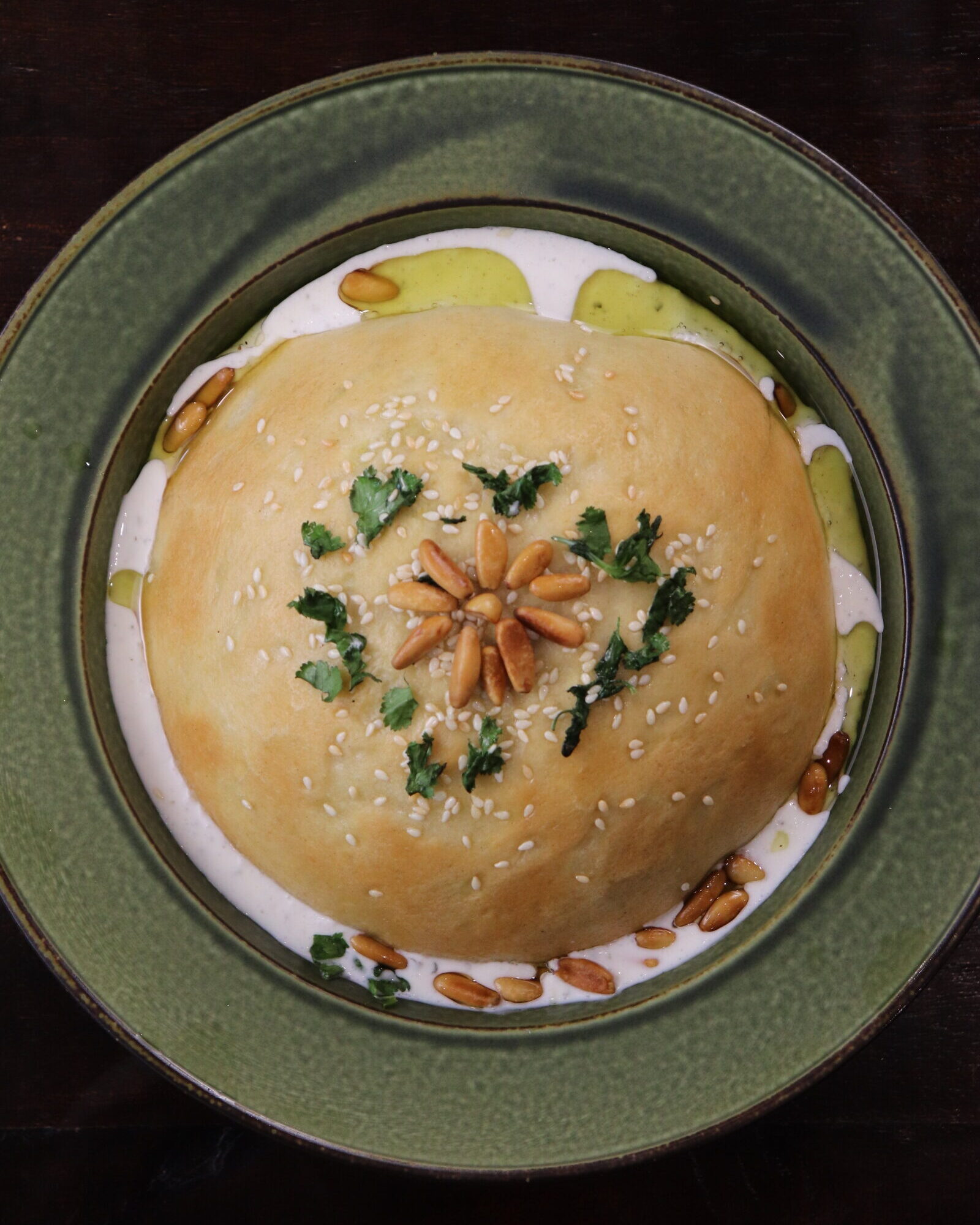
The name perfectly describes how the dish is prepared. A mixture of spiced rice, meat, nuts, and sometimes vegetables is placed inside a baking dish and then covered with dough or pastry. As it bakes in the oven, the pastry forms a golden crust that seals in the flavours. When the dish is cut open at the table, the crust is lifted away like a curtain to reveal the fragrant rice hidden inside.
This dramatic presentation is one of the reasons the dish is so memorable. When the crust is sliced open, the aroma of warm spices, rice, and meat fills the room, making it a beautiful centrepiece for the table.
The Origins of Parda Plau in Kirkuk
Parda Plau is believed to originate from Kirkuk Governorate in northern Iraq, a region that has long been a crossroads of cultures and traditions. The city of Kirkuk sits between northern Iraqi cities such as Erbil and Sulaymaniyah and has historically served as a link between northern and central Iraq.
Because of its location, Kirkuk developed a remarkably diverse society. Over the centuries, the city has been home to Kurds, Arabs, Turkmens, Assyrians, Chaldeans, Syriacs, Armenians, and a Jewish minority. Each community brought its own cooking traditions, ingredients, and flavours.
As these communities lived side by side, their culinary traditions naturally influenced one another. The result is a regional cuisine that blends elements from Middle Eastern, Turkish, Kurdish, and Arab cooking. Many dishes from Kirkuk reflect this cultural exchange, and Parda Plau is one of the most striking examples.
A Cuisine Shaped by Many Communities
The food culture of Kirkuk reflects the contributions of many different groups who lived in the region.
Turkmen communities introduced cooking styles similar to Turkish cuisine, including rice pilafs, grilled meats, and dishes cooked with warming spices. Kurdish cooking contributed hearty rice dishes and vegetable-based meals influenced by the surrounding mountains and countryside.
Arab cuisine from nearby regions such as Mosul, Salah al-Din, and Diyala also shaped Kirkuk’s food traditions, bringing dishes like tashreeb, rice with vermicelli, and various stews. Assyrian and Armenian communities added their own flavours as well, contributing dishes like dolma, grilled kebabs, and rice dishes filled with nuts and dried fruit.
Through centuries of coexistence, these traditions blended together to create a shared regional cuisine. Instead of belonging to a single group, dishes like Parda Plau became part of the collective culinary heritage of the region.
What Makes This Biryani Iraqi?
Although Parda Plau is sometimes compared to biryani, it differs from the South Asian version in several ways.
Iraqi rice dishes tend to focus on the pilaf cooking method, where rice is cooked in broth with spices so that each grain absorbs flavour during the cooking process. The spices used are typically warm and aromatic rather than intensely spicy.
Common flavours include cinnamon, cardamom, black pepper, and allspice. Many Iraqi rice dishes also include raisins, almonds, or other nuts, which add texture and a subtle sweetness.
The defining feature of Parda Plau, however, is the pastry crust. Instead of serving the rice directly from a pot, the rice is baked inside a dough covering. This method traps steam and allows the rice to finish cooking gently while the pastry turns crisp and golden.
The result is a dish that is both comforting and visually impressive.
The Armenian Pumpkin Variation
In some Iraqi Armenian households, there is a fascinating variation of Parda Plau that replaces the pastry crust with a whole pumpkin.
In this version, the pumpkin is hollowed out and filled with rice, meat, spices, nuts, and sometimes dried fruits before being baked in the oven. As the pumpkin cooks, it softens and adds a subtle sweetness to the rice filling.
This variation reflects the Armenian culinary tradition of stuffing vegetables and fruits with rice or meat mixtures. It also highlights how different communities adapted shared dishes in their own ways while living in the same region.
When Is Parda Plau Eaten?
Because of the time and effort required to prepare it, Parda Plau is usually reserved for special occasions rather than everyday meals.
Families often prepare it for celebrations, gatherings, and holiday meals. It is especially popular when hosting guests because of its impressive presentation. When the pastry crust is cut open at the table and the fragrant rice is revealed, it becomes a memorable moment that everyone shares.
Keeping Culinary Traditions Alive
Today, Parda Plau continues to be enjoyed by families connected to the cultural traditions of Kirkuk. It is cooked by Iraqis of different backgrounds, including Arabs, Kurds, Turkmens, Assyrians, and Armenians.
For many people in the Iraqi diaspora, dishes like this are also a way of preserving cultural identity and passing traditions on to future generations. Cooking these recipes keeps family memories alive and connects people to their heritage.
For me, making Parda Plau was more than just trying a new recipe. It was a way of exploring a dish I had heard about for years and bringing a small piece of family tradition back into my kitchen. And like many traditional dishes, once you make it and share it with others, it quickly becomes a meal worth repeating.
Iraqi Biryani Parda Plau – Aromatic Spiced Rice Wrapped in Dough
Ingredients
Chicken marinade
- 500 g Cubed chicken breast
- 1 Onion
- 1 Bay leaf
- 6 Cardamom
- 2 tbsp Curry powder
- 1 tsp all spice
- 1 tsp cumin
- 1 tsp Black pepper
- 1 tsp ginger powder
- 1 tsp cinnamon
- 1 tsp turmeric
- 1 tsp salt
Rice
- 1 cup sweetcorn
- 2 cups rice
- 1/2 cup nuts
- 1 cup raisins
- 1 cup peas
- pinch of nutmeg
- 2-3 cloves
- 1 cup carrots chopped into small cubes
- 1 cup potatoes chopped into small cubes
- 1 cup vermicelli
- 3.5 tsp Salt
Yogurt sauce
- 500 g full fat yogurt
- 1 cup cold water
- 1 tbsp corn starch
- 2 tbsp dried mint
- 1 tsp salt
Dough
- 300 g All purpose flour
- 90 ml Water
- 90 ml Milk
- 3 g Active dried yeast
- 1 tsp Salt
- 1 tbsp Sugar
- Handul of sesame seeds
- 7 g olive oil
- Extra olive oil To brush the baked dough once out the oven
To serve
- Handful toasted pine nuts or slithered almonds
- Handful of chopped parsley
Instructions
Make the Dough
- In a small bowl mix 90 ml warm water, 90 ml milk, sugar, and yeast.
- Leave for 10 minutes until foamy.
- In a large bowl combine flour and salt.
- Add the yeast mixture and olive oil.
- Knead for 15 minutes using the standard mixer on a medium setting until smooth.
- Cover and let it rise for 1-2 hour until doubled in size.
Prepare the Yogurt Sauce
- In a saucepan whisk together (do not turn on the heat at this step, it should be mixed when cold):yogurtcold watercornstarchsalt
- Cook over medium heat while stirring constantly.
- When it thickens slightly/bubbles, add dried mint.
- Remove from heat and set aside.
Toast Vermicelli
- Heat a little oil in a pan.
- Add vermicelli and toast until golden brown.
- Remove from heat.
Combine the Biryani Filling
- In a large bowl combine:toasted vermicellivegetablesToasted slithered almondsRaisins
Cook the Chicken
- Dice the chicken breast.
- In a large pan sauté finely chopped onion in oil until soft.
- Add:chickencardamomcurry powderblack pepperbay leafturmericginger powdernutmegcuminclovesall spicecinnamonsalt
- Cook until chicken is partially cooked
Cook the rice
- In the same pot the chicken is cooked in, add the biriyani filling mixture and mix.
- Add the drained rice and mix.
- Add the salt. and water. Cover with a lid wrapped in a cloth to absorb the excess condensation and trap steam more evenly avoiding a soggy surface rice.
- Leave on the stove for 20mins on a very low heat.
- After 20mins, turn of the stove and remove from the hob. Let it rice with the lid on for 10mins.
Assemble the Parda Pilau
- Preheat oven to 190°C (350°F).
- Grease a bowl with oil or even a cake release liquid which i prefer, i am using a sphere cake tin.
- Sprinkle a generous amount of sesame seeds in the tin so when it's flipped it will be baked on the top of it.
- Roll the dough thin into a large circle.
- Line the tin with the dough, leaving excess hanging over the edges.
- Fill with the biryani rice mixture.
- Fold the extra dough over the top to seal the rice inside.
- Lightly spray the dough with water.
- Bake for 15mins covered and 15mins uncovered until the dough is golden brown and crisp.
Serve
- Remove from oven and brush the crust with extra olive oil.
- Carefully flip onto a serving plate.
- Using a squeezey bottle, carefully fill the plate with the yogurt around the perimeter.
- Garnish with:toasted pine nuts or slivered almondschopped parsley