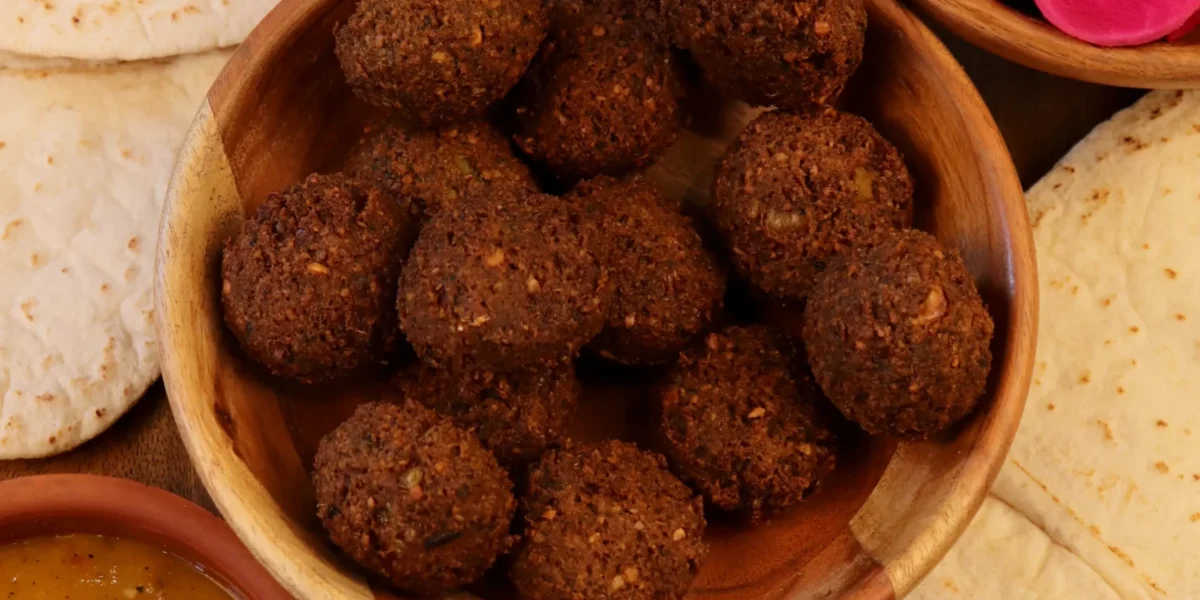
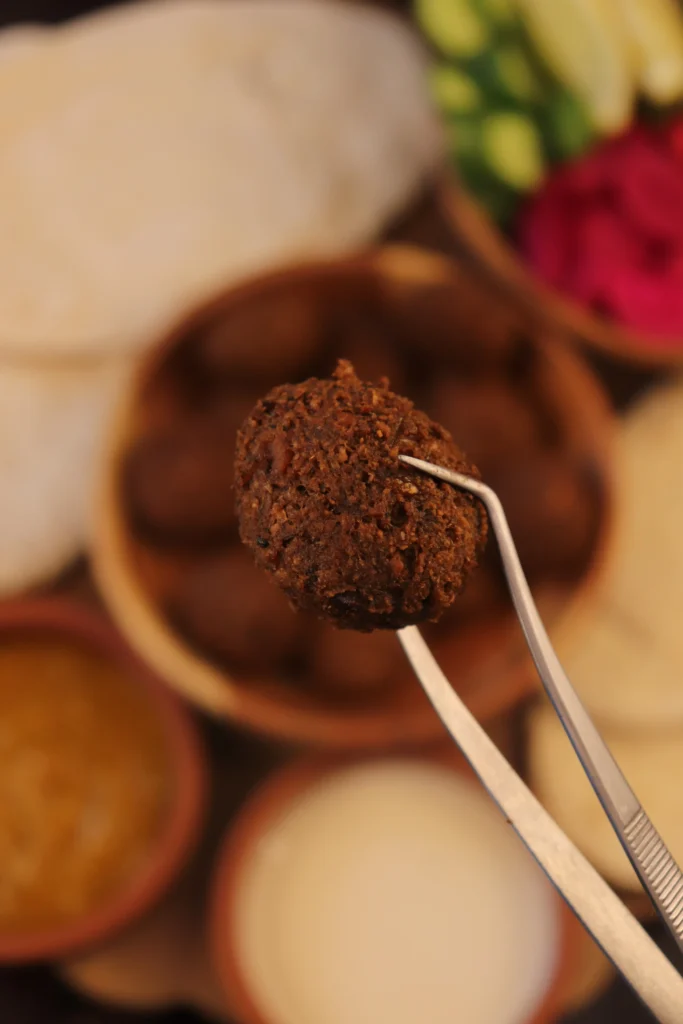
What is falafel?
Origin and history of falafel
Falafel likely originated in Egypt, where the falafel recipe was made from fava beans and later spread across the Middle East. Over time, chickpeas became the dominant base in many regions, especially in Levantine cuisine. It became a popular street food due to its affordability and filling nature.
Why falafel is so popular worldwide
Falafel is popular because it’s affordable, plant-based, and highly adaptable to different cuisines. Its crispy texture and rich flavor make it appealing even to non-vegetarians. It also fits modern dietary trends like vegan and vegetarian eating.
Falafel ingredients (what is falafel made of?)
Main falafel ingredients explained
The core ingredient is usually dried chickpeas (or sometimes fava beans), which are soaked but not cooked before blending. Garlic, onion, coriander, and cumin are commonly added for flavor. The mixture is ground into a coarse paste to hold shape when cooked.
Optional herbs and spices for extra flavor
Lebanese 7 spice and curry powder are sometimes added to the mix.
Can you use canned chickpeas?
Canned chickpeas are generally not recommended because they are too soft and contain excess moisture. This can make the mixture fall apart during frying. Dried chickpeas soaked overnight give the best texture and structure.
How to make falafel recipe step-by-step
Preparing the chickpea mixture
Soak dried chickpeas overnight, then drain them thoroughly before blending. Combine them with herbs, spices, onion, and garlic, then pulse into a coarse, grainy paste. The mixture should hold together when pressed but not become smooth like hummus.
Shaping and frying falafel
The mixture is shaped into balls or patties using hands or a scoop. They are then deep-fried in hot oil until golden brown and crispy on the outside. Proper oil temperature ensures a crisp crust without absorbing too much oil. You can find the traditional falafel scoops around London middle-eastern stores. I would recommend to pay a visit to Goodies Supermarket in Park Royal, they always seem to have the falafel scoops when i’m there.
Baking vs frying method
Frying produces a traditional crispy texture with a soft interior, which is most authentic. Baking is a healthier alternative but results in a slightly drier and less crunchy falafel. Air-frying is a middle option that reduces oil while keeping some crispiness.
Is falafel healthy?
Nutritional benefits of falafel
Falafel is rich in plant-based protein, fiber, and essential minerals like iron and magnesium. It can support digestion and help maintain steady energy levels. However, its nutrition depends on cooking method, especially oil used in frying.
Calories and protein content
A typical serving of falafel contains moderate calories, often ranging from 50–80 calories per piece depending on size and cooking method. It provides a good amount of protein from legumes, usually about 2–3 grams per piece. When paired with whole grains, it becomes a more complete protein source.
Is falafel good for weight loss?
Falafel can support weight loss when baked or air-fried and eaten in controlled portions. Its high fiber content helps with satiety, reducing overall calorie intake. However, deep-fried versions can be calorie-dense, so moderation is key.
Falafel wrap and serving ideas
What to eat falafel with
Falafel is commonly eaten with flatbreads like Lebanese bread and Iraqi samoon, which help hold the fillings and sauces together. It’s often paired with fresh vegetables (tomato, cucumber, lettuce) and pickles for contrast in texture and acidity. Lemon juice is frequently squeezed over it, and sauces like tarator or amba are added to balance richness.
What sauce goes with falafel
Tarator sauce is a traditional Lebanese pairing, giving a creamy, nutty, and slightly tangy profile that complements the falafel well. Iraqi Amba sauce adds a strong, tangy mango-pickle flavour that can dominate but also works as a bold contrast to the earthy chickpeas.
How to eat falafel (wrap, bowl, or snack)
Falafel is most traditionally eaten as a tightly packed wrap or sandwich in street-food style, where each bite combines bread, vegetables, sauce, and falafel together. Bowls or salad-style servings are a more modern presentation and can change the balance of flavours since components are separated rather than integrated. Ultimately, i’m not a fan of falafel salad bowls and would always recommend it as a wrap/sandwich.

TIPS
Use dried chickpeas (not canned) for best texture Chill mixture before shaping for crispier falafel Don’t over-process the mixture
Experiencing Falafel Around the Middle East
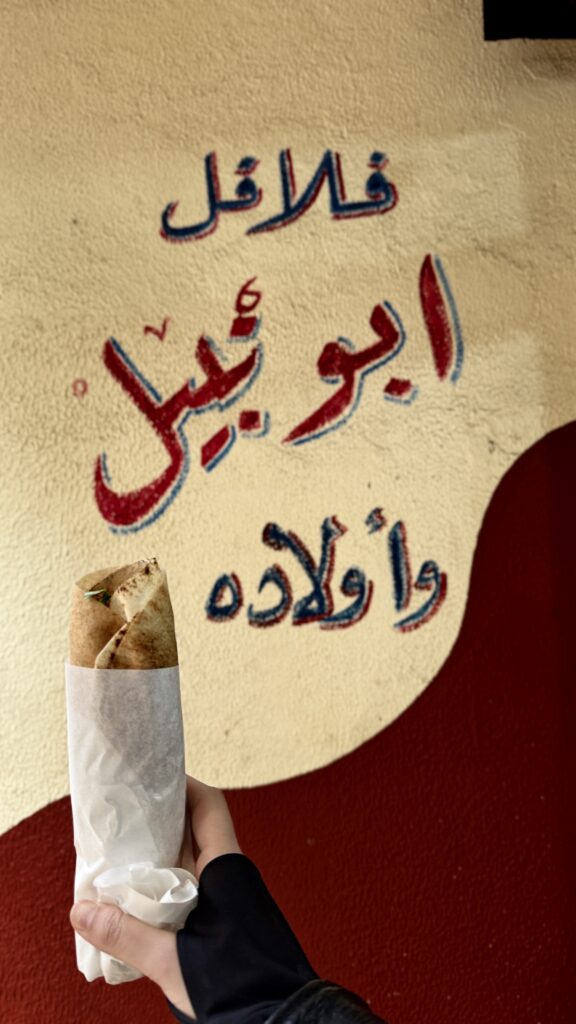
Beirut, Lebanon – Falafel Abou Nabil & Sons
This is genuinely where I had the best falafel of my life. It was simple, but executed really well. Definitely recommend it for anyone travelling to Lebanon.
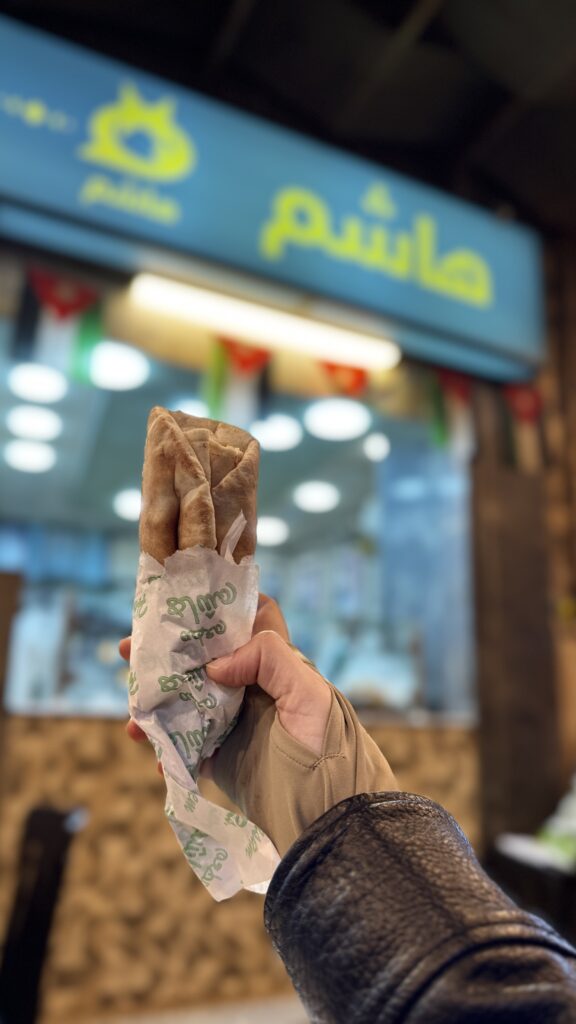
Amman, Jordan – Hashem Restaurant
This spot was all over YouTube vlogs and social media as a must-visit falafel place in Amman. Honestly, I was quite disappointed. Maybe Falafel Abou Nabil & Sons in Beirut raised my expectations too high, but it felt a bit dry and needed more sauce, vegetables, and pickles. Unfortunately, I didn’t have enough time to try other falafel spots.
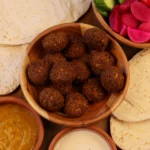
Falafel
Ingredients
- 200 g dried chickpeas
- 200 g dried split shelled fava beans
- 2 litres water
- 100 g white onion
- 5 garlic cloves
- 1/2 bunch coriander
- 1.5 tsp salt
- 1 tsp 7 spices
- 1 tsp ground coriander
- 1 tbsp cumin
- 1/2 tsp cayenne pepper
- 1 tsp baking powder
- 1 tsp baking soda
- 1 tbsp lemon juice
- 1/4 cup water
Instructions
Soak the Beans
- Place the dried chickpeas and dried fava beans in a large bowl.
- Cover with 2 litres of water and soak overnight.
Prepare the Mixture
- Drain and rinse the beans under cold water.
- Transfer to a large bowl and add the onions, garlic, and cilantro.
- Mix to combine.
Blend
- Transfer half of the mixture to a food processor or meat grinder.
- Pulse until it reaches a medium-coarse texture, scraping down the sides as needed.
- Transfer to a bowl and repeat with the remaining mixture.
Season
- Add salt, spices, and baking powder, then mix.
- Place the baking soda on top and pour the lemon juice over it.
- Add 1/4 cup water and mix by hand for about 2 minutes until well combined.
- Cover and let rest for 10 minutes.
Shape & Fry
- Heat vegetable 180°C (350°F) in a medium pan.
- Use a traditional falafel scoop (mould) to shape the mixture into discs.
- Gently release the falafel directly into the hot oil.
- Fry until golden brown and cooked through.
- Transfer to a paper towel-lined plate to drain.
Serve
- Serve the falafel in fresh Lebanese bread with a squeeze of lemon juice, stuffed with pickles, fresh mint, and sliced tomatoes, then drizzle with tarator sauce.
Video
FAQ
Falafel is commonly eaten with fresh vegetables, pickles, tahini-based sauces like tarator, and fruitier condiments like amba. It’s often served in flatbreads such as Lebanese pita or Iraqi samoon.
Falafel is made from soaked (not cooked) chickpeas &/or fava beans, blended with herbs like coriander, onion, garlic, and spices such as cumin and coriander seed. The mixture is shaped into balls and fried or baked.
The most traditional sauces are tarator (tahini-based garlic sauce) and amba (a tangy mango pickle sauce). Both complement falafel well—tarator adds creaminess, while amba adds sharp, tangy sweetness.
When made properly, yes—falafel should be crispy on the outside and soft, fluffy, and herby inside. If it’s dry or dense, it hasn’t been done right.
Falafel on its own is fairly simple and earthy in flavour. It’s an affordable and filling street food, which is why it’s often paired with sauces, bread, and vegetables to create a balanced and flavourful meal.
They can for some people because chickpeas are high in fiber and certain fermentable carbohydrates that may cause bloating. This varies depending on individual digestion and portion size.
Yes—falafel is rich in plant-based protein, fiber, and micronutrients from herbs and legumes. However, frying increases the calorie and fat content, so baked versions are a lighter option.