
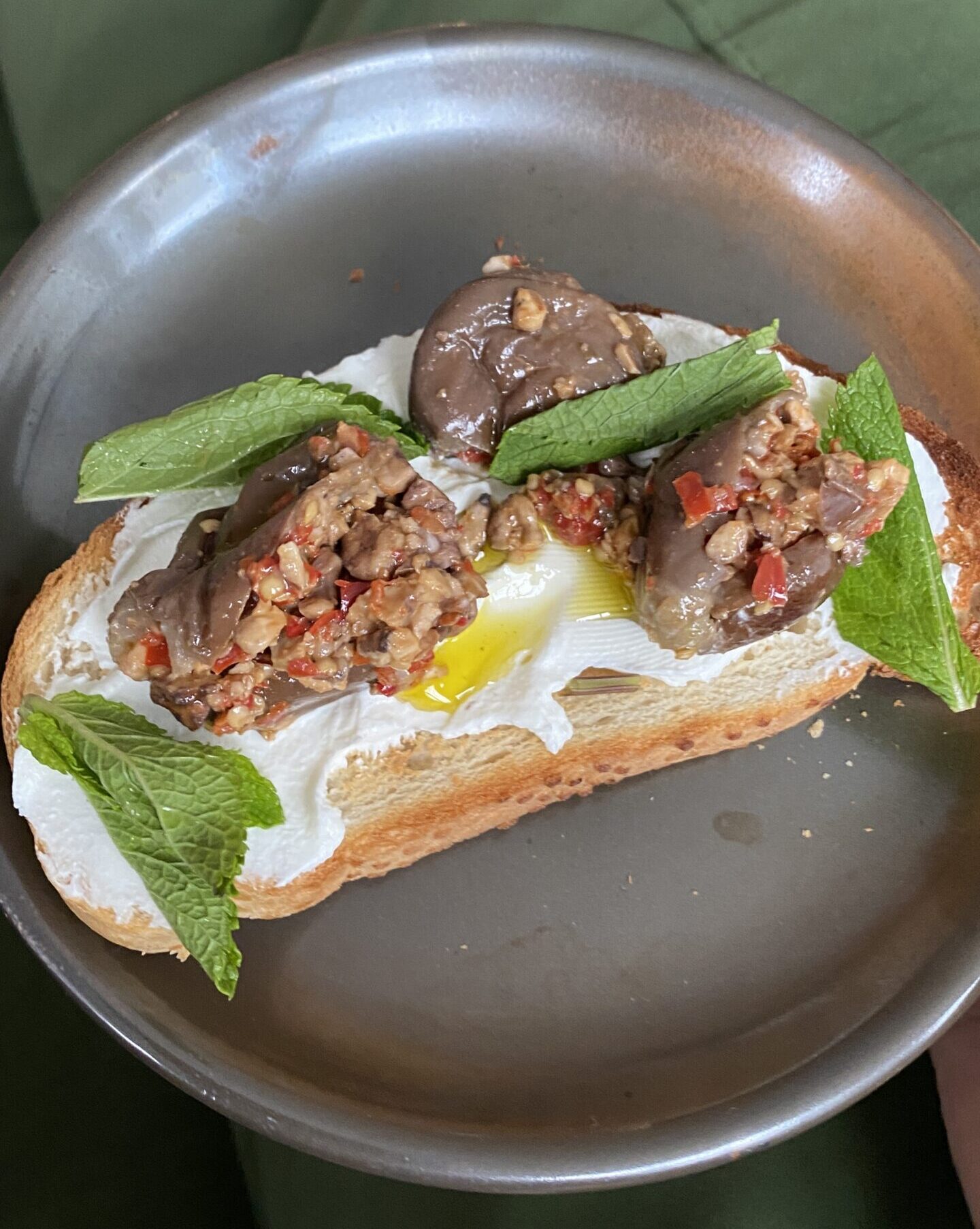
The Origins of Makdous
Makdous is a beloved staple of Levantine cuisine, particularly in Lebanon, Syria, and Palestine. These small, preserved aubergines (eggplants) are typically stuffed with walnuts, garlic, red peppers, and chili, then cured in olive oil. Traditionally prepared in late summer and autumn, makdous were originally made as a way to preserve seasonal vegetables for the winter months, turning fresh aubergines into a tangy, spicy, and richly flavored delicacy.
The name “makdous” comes from Arabic, meaning “pressed” or “stuffed,” reflecting the careful process of salting, pressing, and filling the aubergines. Today, makdous is more than just a preserved food—it is a cultural icon, often served at breakfast, on mezze platters, or as a flavorful accompaniment to bread and cheese.
Why Makdous Is So Special
Makdous is treasured in Middle Eastern households for several reasons:
- Bold flavours – The combination of walnuts, garlic, red peppers, and chili gives a complex and satisfying taste.
- Preservation technique – Salting, pressing, and curing in olive oil creates a unique texture and ensures a long shelf life.
- Versatility – Served at breakfast, as part of mezze, or alongside traditional dishes like labneh and flatbread.
- Cultural tradition – Preparing makdous is often a family activity, with recipes passed down through generations.
Key Ingredients for Authentic Makdous
Aubergines:
- Small, firm purple or striped aubergines (about the size of a golf ball) are ideal. Their size allows for easy stuffing and consistent curing.
Filling:
- Walnuts – Provide crunch and nuttiness.
- Garlic and red chili – Add aromatic heat.
- Red peppers – Minced and drained to concentrate flavor.
Preservation:
- Olive oil – The classic medium for curing, enriching flavor and preserving freshness.
- Rock salt – Essential for drawing out moisture and achieving the correct texture.
The balance of these ingredients ensures makdous is tangy, slightly spicy, and rich with earthy notes from walnuts and olive oil.
Preparing the Aubergines
- Wash aubergines thoroughly.
- Boil in a large saucepan for 15 minutes, placing a plate on top to prevent floating.
- Immediately transfer to cold water to stop cooking.
- Drain and let rest in a colander for 15 minutes.
This process softens the aubergines slightly, making them easier to slice and stuff while maintaining their structure.
Salting and Pressing
- Slice each aubergine halfway lengthwise without cutting all the way through.
- Sprinkle rock salt inside each aubergine cavity.
- Place them on a towel, cover, and press with a heavy weight for 24 hours.
Pressing draws out excess moisture, which is crucial for achieving the characteristic texture of makdous—firm yet tender, and not soggy.
Preparing the Walnut Filling
- Finely chop walnuts and mix with:
- Crushed garlic
- Chopped red chili
- Minced red peppers
- Combine thoroughly to create a flavorful stuffing that will complement the aubergines.
The filling is slightly spicy, aromatic, and rich, giving makdous its signature taste.
Stuffing and Preserving
- Carefully open each aubergine and fill with about 1 heaped teaspoon of the walnut mixture.
- Pack the stuffed aubergines tightly into a sterilized jar.
- Pour olive oil over the top until the aubergines are completely submerged.
- Seal and store in a cool, dark place.
- Leave to cure for 4 weeks for the flavors to develop fully.
Over time, the flavors deepens and mellows, creating a rich, tangy, slightly spicy preserved treat.
Serving Makdous
Makdous is versatile and can be enjoyed in many ways:
- Breakfast – Serve with fresh bread, olive oil, and labneh.
- Mezze platter – Pair with olives, cheese, hummus, and fresh vegetables.
- Snack – Eat directly from the jar as a flavorful finger food.
Its concentrated flavor and firm texture make makdous a distinctive, bold addition to any table.
Tips for Perfect Makdous
- Use small, firm aubergines for best results.
- Ensure proper pressing to remove moisture and avoid soggy aubergines.
- Let the red pepper mixture drain overnight to concentrate flavor.
- Pack jars tightly and fully cover with olive oil to prevent spoilage.
- Allow at least 4 weeks of curing for full flavor development.
Makdous in Middle Eastern Culture
Makdous is a symbol of seasonal preservation and culinary tradition. In Lebanon, Syria, and Palestine, families often prepare large batches at the end of summer, storing them to enjoy throughout the winter. Making makdous is a social and family activity, reflecting the importance of sharing food and maintaining heritage.
This preserved aubergine has endured for generations because it combines practical preservation with bold, enjoyable flavors, making it both functional and delicious.
Making Makdous at Home
While it takes patience, making makdous at home is rewarding. By following the steps of boiling, salting, pressing, filling, and curing, you can produce authentic, flavorful preserved aubergines that will impress family and friends.
Once cured, makdous can be enjoyed on its own or as part of a Middle Eastern breakfast or mezze spread, offering a taste of Levantine tradition right at home.

Makdous – Preserved stuffed aubergine
Ingredients
- 1 kg tiny purple or striped aubergines (eggplants) about the size of a golf ball
- 2 romano peppers
- 150 g walnuts
- 4 garlic cloves
- 4 red chillies, deseeded and finely chopped
- olive oil, as needed
- rock salt, as needed
Instructions
Prepare the Aubergines
- Start by washing the aubergines thoroughly. Bring a large saucepan of water to the boil and add the aubergines, placing a plate on top to stop them floating to the surface. Boil for 15 minutes, until slightly softened.
- Drain them, then immediately transfer the aubergines to a bowl of cold water to stop them cooking any further. Once cooled, remove them and leave to rest in a colander for 15 minutes.
Salt and Press the Aubergines
- Set up a bowl with a perforated tray or rack on top and lay a clean dish towel over it.
- Using a sharp paring knife:Remove the tops of the aubergines as close to the tip as possible.Carefully slice halfway through each aubergine lengthways, creating an opening without cutting all the way through.
- Sprinkle a small pinch of rock salt inside the flesh of each aubergine. Place them on the dish towel opening side down.
- Cover with another dish towel, then place a tray or plate on top large enough to cover them all. Add a heavy weight on top to press them down and draw out excess moisture. This step is key for getting that proper makdous texture.
- Leave the aubergines to strain for 24 hours in a cool place.
Prepare the Peppers
- While the aubergines are pressing, slice the peppers and remove all the seeds.
- Place them in a food processor and blitz until finely minced. Transfer to a fine sieve and leave to strain overnight to remove as much moisture as possible.
Make the Walnut Filling
- Finely chop the walnuts using a knife and place them in a mixing bowl with:Crushed garlicChilli
- Add the red pepper paste and mix everything together until well combined.
Stuff the Aubergines
- Open each aubergine gently and fill the cavity with about 1 heaped teaspoon of the walnut stuffing. Place the stuffed aubergines on a plate and repeat until they’re all filled.
- Wipe each aubergine lightly with paper towel to clean the outside.
Jar and Preserve
- Pack the stuffed aubergines tightly into a sterilised jar. Once full, pour in enough olive oil to completely cover them.
- Seal the jar and store it in a cool, dark place.
- Leave the makdous to cure for 4 weeks before opening. The flavours deepen over time, and honestly, they just get better and better.
[…] — the only exception he’s ever made is for makdous (my recipe for makdous is posted here: https://shakumaku.co.uk/makdous-preserved-stuffed-aubergine/). So when he came home from an Iraqi family friend’s house saying he’d tried tepsi, a […]
[…] — the only exception he’s ever made is for makdous (my recipe for makdous is posted here: https://shakumaku.co.uk/makdous-preserved-stuffed-aubergine/). So when he came home from an Iraqi family friend’s house saying he’d tried tepsi, a […]