What Is Onigiri? Meaning and Onigiri Pronunciation
What Does Onigiri Mean in Japanese?
Onigiri” (おにぎり) comes from the Japanese verb nigiru (握る), which means “to grasp” or “to squeeze by hand.”
So, onigiri literally means “hand-formed rice” or “gripped rice ball.”
It refers to rice that is shaped by hand into triangles, balls, or cylinders, often filled with ingredients and wrapped in nori (seaweed).
How to Pronounce Onigiri Correctly
Onigiri is pronounced: oh-nee-GHEE-ree
Break it down like this:
- O = “oh”
- ni = “knee”
- gi = “gee” (hard “g” like “go”)
- ri = “ree”
The emphasis is slightly on the “GEE” part: oh-nee-GEE-ree.
The Difference Between Onigiri and Sushi
Although both use rice, onigiri and sushi are very different foods:
Onigiri:
- Made with plain or lightly salted rice
- Shaped by hand into triangles or balls
- Often filled with tuna, salmon, or pickled plum
- Usually wrapped in nori
- Designed as a simple, portable snack or lunch
Sushi:
- Made with rice seasoned with vinegar, sugar, and salt
- Includes raw fish, seafood, or vegetables
- Comes in rolls, nigiri, or sashimi styles
- Focused on balance of flavors and presentation
Ingredients You Need to Make Onigiri at Home
Best Rice for Making Onigiri
The best rice for making onigiri is Japanese short-grain rice (often referred to as sushi rice). It is naturally stickier than other rice varieties due to its higher starch content, which helps it hold its shape when formed into rice balls. This stickiness is essential for onigiri, as it allows the rice to stay compact without falling apart, while still maintaining a soft, fluffy texture.
This is different from Thai glutinous rice, which becomes overly sticky and clumps together into a paste-like texture when cooked. Onigiri rice, by contrast, should hold distinct grains while still being cohesive enough to shape by hand.
For sourcing rice in the UK, I usually buy from Wing Yip or Tian Tian Market in London. One of my preferred brands is Nishiki, which is a premium medium-grain Californian-grown Japonica rice designed for sushi. Because it is a medium-grain rice, I prefer to let the shaped onigiri rest in the fridge for a little longer so the shape sets properly—whereas with true short-grain rice, this step isn’t as necessary.
I typically purchase Nishiki from Tian Tian Market in either King’s Cross or Wembley.
Another brand I like is Sailing Boat Premium Sushi Rice, which can be found at the Wing Yip store in Staples Corner.
While sushi rice is available in mainstream supermarkets such as Tesco and Waitrose, it is often significantly more expensive in their ethnic food sections. For better value, I recommend shopping at Asian supermarkets, which also helps support smaller scale supermarkets.
Traditional Onigiri Fillings
- Spicy Tuna and Mayo
- Salmon / Grilled Salmon
- Imitation crab & mayo
- Katsuobushi (Bonito flakes)
- Kombu (Simmered seaweed)
Optional Ingredients for Kawaii Snacks
- Carrot – finely grated
- Cucumber – sliced thin
- Sesame seeds – texture difference
- Furikake (Rice seasoning) – Adds flavour
- Pickled vegetables – adds colour accents
How to Make Onigiri Step by Step
How to Cook Rice for Onigiri
Step 1: Rinse the rice till the water is clear
Step 2: Soak the rice in cold water for 20mins
Step 3: Boil water
Step 4: Place a suitably sized pot on the stove over medium heat. Once hot, add the drained rice and stir for 1–2 minutes, allowing it to lightly toast and any remaining moisture to evaporate.
Next, add water. I typically use a 1:1.3 rice-to-water ratio (1 cup rice to 1.3 cups water), although this can vary depending on the brand, so always check the package instructions.
It’s also important to note that the water ratio for sushi rice differs from other rice types. For example, South Asian and Middle Eastern varieties such as basmati, sella, or Egyptian rice often use a higher water ratio, typically around 1:1.5, as they are less sticky and require different cooking methods.
How to Shape Onigiri by Hand
- Using a mold. Temu have plenty of great options.
- Using cling film. Simply add the sushi rice to the cling film and wrap the film around it like a parcel and using your hands shape it into a triangular shape.
- If you don’t have any of that, you can use your hands!
How to Keep Rice from Sticking
It depends on how you are preparing the onigiri. If you are using a mold, simply use a spatula or spoon to scoop the rice into the mold, then press it firmly into shape.
If you are shaping it by hand, you can either use cling film to create a barrier between your hands and the rice, or lightly wet your hands with water before shaping. The water helps prevent the rice from sticking, making it much easier to handle.
I use this same technique of wetting my hands in my kubba halab recipe posted on the blog, where I also work with sushi rice for this popular Iraqi dish.
How to Wrap Onigiri the Convenience Store way
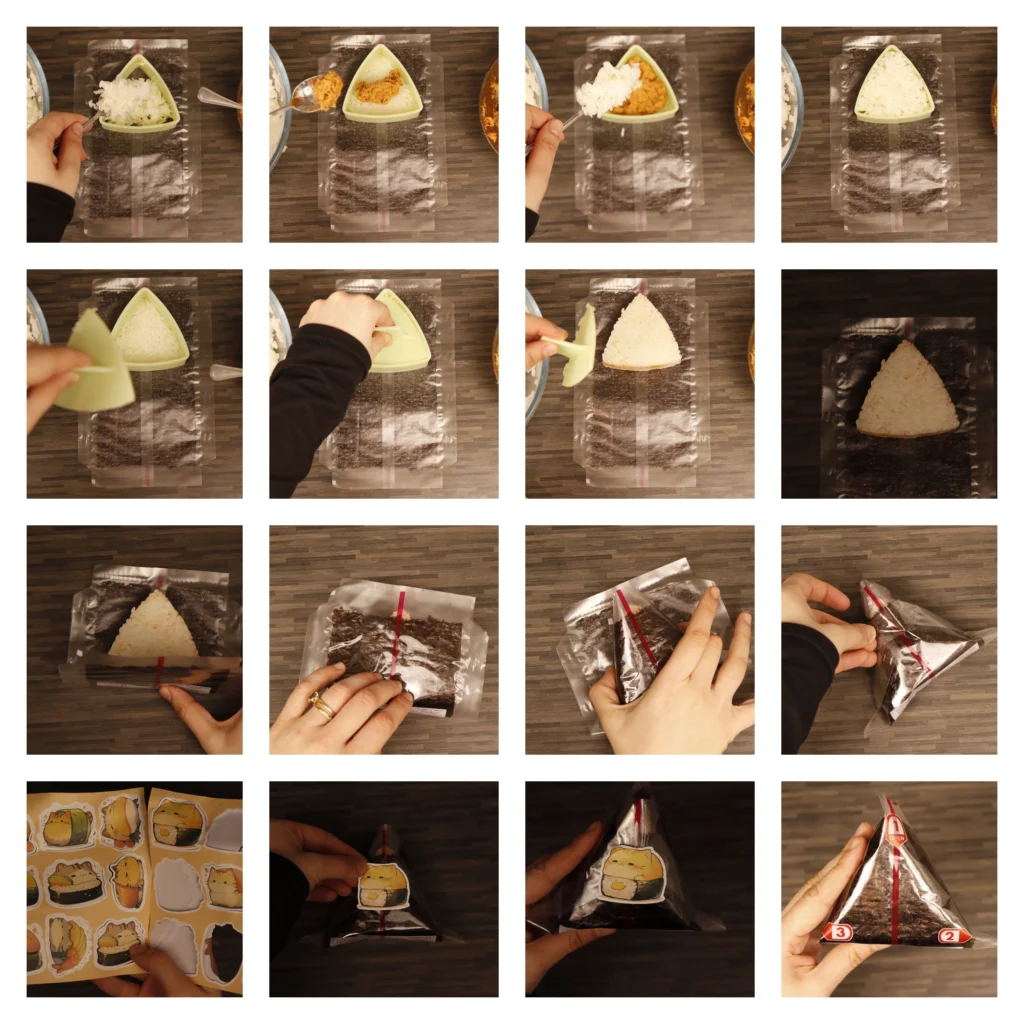
How to Wrap Onigiri with Nori
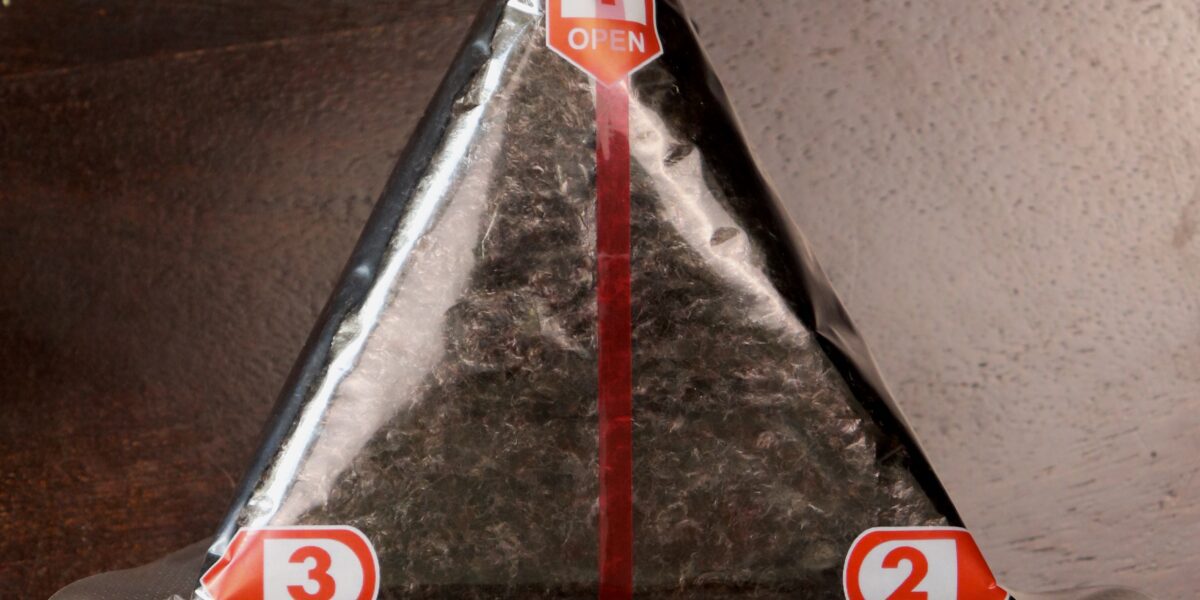
- Use a convenience store-style wrapper with separate layers for rice and nori
- Place the onigiri in the centre of the plastic wrapper using the guides or markings
- Fold the sides of the wrapper inward to fully enclose the rice
- Pull the numbered tabs in order (usually 1 → 2 → 3) to remove the internal separators
- Allow the nori to wrap around the rice as the plastic layers are removed
- Press lightly to secure the wrap in place
- Open and eat!
Tips for Keeping Nori Crispy
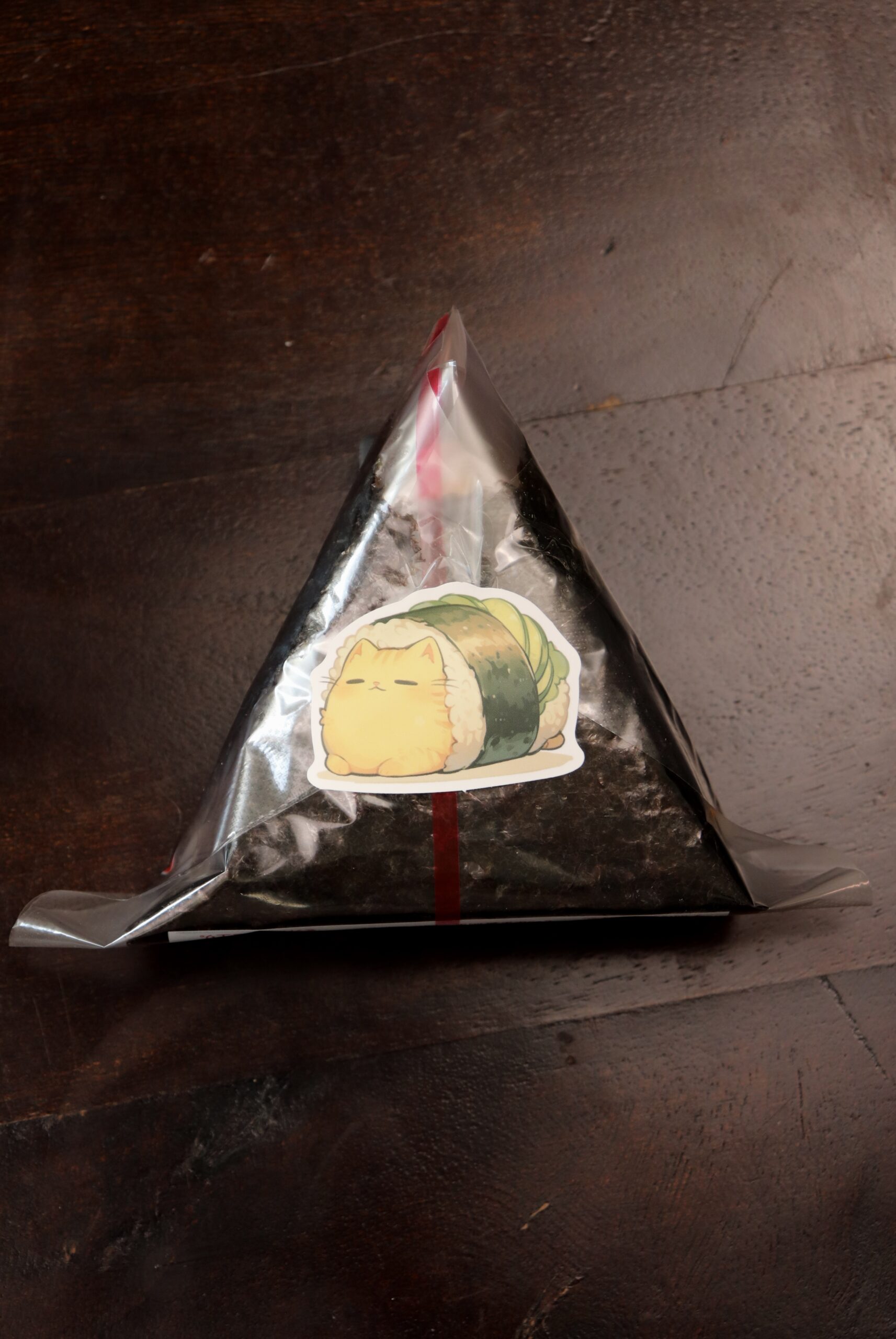
- Use convenience-store style plastic wrappers that separate the rice and nori until eating, keeping the seaweed dry and crisp.
- Wrap the nori separately and only add it just before eating to prevent it from becoming soggy.
- Store onigiri in an airtight container to reduce moisture exposure.
- Keep the rice and nori apart in the fridge or freezer until serving.
- Avoid placing onigiri near wet or warm foods that release steam and soften the nori.
How to Open Onigiri from Convenience Store Packaging
Step-by-Step Video Tutorial to Opening Packaged Onigiri
Why Japanese Onigiri Packaging Is Unique
Japanese onigiri packaging is unique because it separates the rice and nori with a thin film to keep the seaweed crisp until the moment you open it. During my trip to Japan in April 2025, I saw these everywhere in convenience stores like 7-Eleven, FamilyMart, and Lawson, using a clever pull-tab system that wraps the nori around the rice as you unwrap it. This style of packaging is now appearing in the UK too, with onigiri sold in places like Wasabi, Tian Tian Market, and even spotted in Lidl.
Spicy Tuna Onigiri: A Popular Japanese Filling
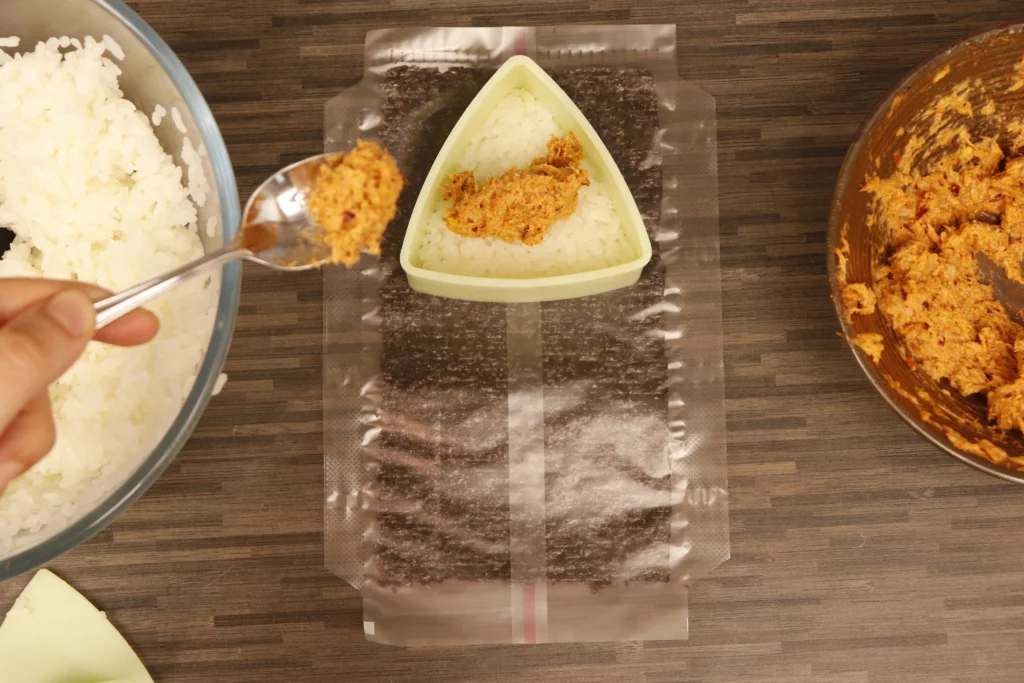
Ingredients for Spicy Tuna Onigiri
- 1 can tuna (drained, approx. 140g)
- 1 tbsp hot sauce
- 4 tbsp mayonnaise (Japanese mayo like Kewpie preferred, or regular mayo mixed with a little vinegar and sugar)
- 1 tsp soy sauce
- 1 tsp rice vinegar
- 1 tsp sugar
- ½ tsp black pepper
- 1½ tsp chili flakes (adjust to taste)
- 1 tsp MSG
- 1 tsp garlic powder
- 1 tsp paprika
- 1 tsp onion powder

Best Rice for Onigiri
• Japanese short-grain rice (sushi rice)
• Sticky texture helps it hold shape
• Soft and slightly chewy when cooked
• Avoid long-grain rice (too dry and loose)
Common Mistakes When Making Onigiri
- Using the wrong rice (e.g., long-grain instead of short-grain Japanese rice)
- Not seasoning the rice properly
- Shaping rice when it’s too hot or too cold
- Pressing too hard or too softly when forming the shape
- Adding too much filling
- Wrapping nori too early, making it soggy
- Having hands that are too wet or too dry when shaping the rice
How to Store and Pack Onigiri for Lunch
Best Way to Pack Onigiri in Bento Boxes
We need onigiri lunch boxes! I’ve been developing this idea in the background, and I’m excited to get to the final product. Tossing an onigiri into your work or school bag isn’t ideal—your water bottle, books, or laptop can easily crush it, which is always a sad outcome. That’s something I’ve learned from my own experience.
Can You Refrigerate or Freeze Onigiri?
You can refrigerate onigiri, but the texture of the rice can change depending on how cold the fridge is. In my experience, onigiri stored in my home fridge tastes great, but when I leave them in the fridge at work the rice becomes hard and dry—likely because the temperature is colder. Cooked rice tends to firm up faster at lower temperatures, which is why the texture can vary between fridges. I usually refrigerate my onigiri for no more than one day, though that’s mostly because they’re too good not to eat straight away.
I’ve also seen in Tian Tian Market (Kings Cross) that they freeze their onigiri with the nori still wrapped around the rice, which surprised me. I’ve always been curious how well the seaweed holds up after freezing and thawing. If you’ve tried freezing onigiri with the seaweed still on, please leave a comment and let us know how it turned out.

Spicy Tuna Onigiri
Equipment
- 1 Onigiri mould
- 4 Onigiri plastic wrappers
- 4 stickers/tape
Ingredients
Sushi Rice
- 1 cup Sushi rice
- 2 tbsp Rice vinegar
- 1 tbsp sugar
- 1 tsp salt
- 275 ml boiling water
Tuna Filling
- 1 can Tuna (drained) approx. 140g
- 1 tbsp hot sauce
- 4 tbsp Mayonnaise (Japanese mayo like Kewpie preferred, or use regular mayo with a bit of vinegar and sugar)
- 1 tsp Soy sauce
- 1 tsp Rice vinegar
- 1/2 tsp Black pepper
- 1 tsp Sugar
- 1.5 tsp Chili flakes (adjust to spice tolerance)
- 1 tsp MSG
- 1 tsp Garlic powder
- 1 tsp Paprika
- 1 tsp Onion powder
To wrap
- 2 sheets Nori/Seaweed (cut in half)
Video
FAQs
You can buy onigiri in the UK at Wasabi branches, Tian Tian Market branches, Japan centre, Lidl (spotted in lidl Luton), Tokyo onigiri, Yamada onigiri, Sosaku onigiri, Onigiri Kome.
Popular fillings include spicy tuna, salmon, tuna mayo, pickled plum (umeboshi), teriyaki chicken, and seasoned vegetables.
Onigiri molds can be found on Temu. Link to mold.
Asian supermarkets like Wing Yip branches & Tian Tian Market stock a variety of nori sheet brands. My favourite Nori sheet brands are Obento, Yutaka and YUMMYTO.