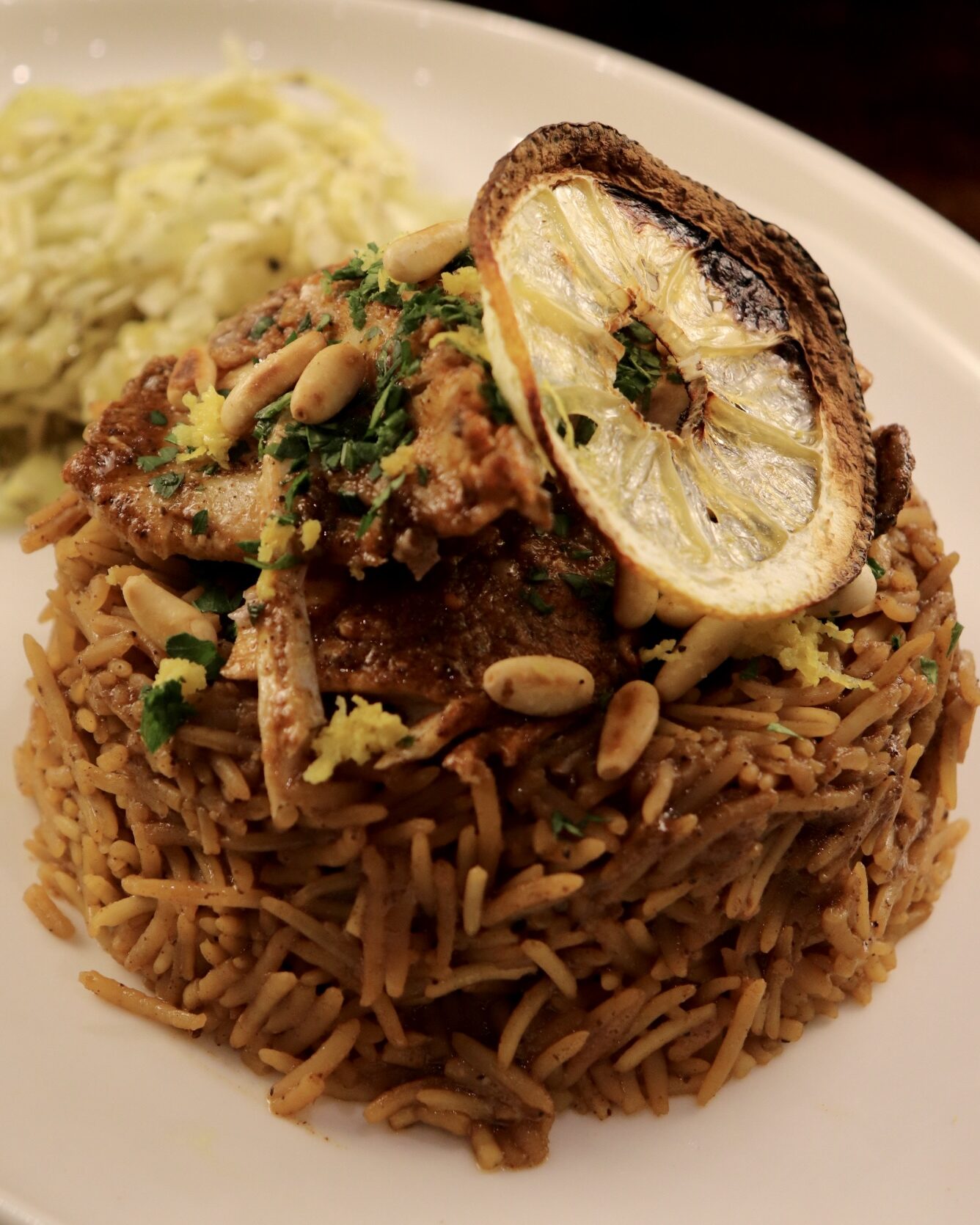
Sayyadieh recipe is a traditional Lebanese fish and rice dish made with spiced fish, fragrant rice, deeply caramelised onions, and a tahini-based tarator sauce. It’s a classic comfort dish from Lebanese cuisine, usually served in coastal areas where fresh fish is easy to get. What makes sayyadieh different is the way the onions are cooked almost to the point of blackening and then used to flavour the stock for the rice, giving it a deep, rich taste. It’s normally served with tarator sauce, which balances everything out with a creamy, tangy finish.
My Experience with Sayyadieh
I’ve always kind of associated Lebanese food with mezze more than anything else. So lots of small plates, sharing food, and everything spread across the table rather than one main dish doing all the work.
I only really came across sayyadieh through my husband’s family, and it’s not something i’d heard of from my Lebanese friends. I remember thinking it was quite different to the usual Lebanese food I knew because it’s very much a proper main dish rather than a selection of bits and pieces.
The main thing that stood out to me was the onions. They’re cooked down really dark, almost blackened, and then used to build the stock for the rice. It sounds simple, but it gives the dish a really deep flavour that you don’t usually get from just spices alone.
I also like it with tarator sauce, which is basically tahini, lemon, garlic, and water. It just lightens everything up and stops it feeling too heavy.
What Does Sayyadieh Mean?
The word sayyadieh comes from the Arabic word sayyad, which means fisherman. So the name basically translates as “fisherman’s dish.”
It makes sense because it originally comes from fishermen using whatever fish they had caught that day, along with basic pantry ingredients like rice, onions, and spices.
Where Did Sayyadieh Come From?
Sayyadieh comes from coastal areas of Lebanon. It’s very much tied to fishing communities where fish was a regular part of daily cooking rather than something considered fancy.
It’s not a modern dish, and it’s been around for a long time as part of everyday home cooking along the coast.
When Is Sayyadieh Eaten in Lebanon?
It’s not really a special occasion dish. It’s more of an everyday home-style meal.
People usually eat it when there’s fresh fish available, or when families are cooking something a bit more filling for lunch or dinner. It’s also common for weekend meals when everyone’s at home.
Is Sayyadieh Strictly Lebanese?
It’s mainly associated with Lebanon, but you do get similar fish and rice dishes across the Levant region, like in Syria, Palestine, and Jordan.
That said, the Lebanese version is quite specific because of the way the onions are cooked down and the tarator sauce that usually comes with it.
Where in Lebanon Did It Come From?
It’s mostly linked to coastal areas, especially southern fishing towns like Sidon (Saida) and Tyre (Sour).
These places have always had strong fishing cultures, so it’s the kind of dish that developed naturally from what people had access to.
Where Is Sayyadieh Popular in Lebanon?
Now it’s eaten all over Lebanon, not just coastal areas.
You’ll find it in homes and restaurants in Beirut, the south, and northern cities as well. It’s not niche anymore — it’s just part of standard Lebanese home cooking.
Is Sayyadieh a Favourite in Lebanon?
It’s definitely a well-loved dish, especially for people who grew up eating it at home.
It’s not really in the same category as mezze dishes that get a lot of attention internationally, but locally it’s still a solid classic. It’s one of those meals people make when they want something filling and traditional.
Are There Similar Dishes?
There are a few similar fish and rice dishes across the region.
You’ll find versions in places like Egypt and other Levant countries, and even more broadly across Mediterranean cooking where fish is cooked with rice and spices.
But what sets sayyadieh apart is mainly the onion base and the tarator sauce served with it.
Final Thoughts
Sayyadieh is a straightforward Lebanese fish and rice dish that’s more about depth of flavour than anything complicated. It comes from coastal cooking in Lebanon and has stayed pretty consistent over time.
It’s a nice change if you’re used to thinking of Lebanese food as mostly mezze, because it shows the more traditional home-cooked side of the cuisine.
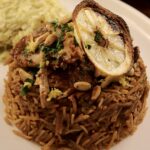
Sayyadieh / Fishermans rice
Ingredients
Fish Stock
- 2 White fish bones and head
- 2 Onions
- Bunch of thyme leaves
- 2 Carrots
- 1 Cinnamon stick
- 3 Celery leaves
- 2 Bay leaves
- 12 Black peppercorns
- 10 Cardamom pods
- 4-5 sprigs green onion
- Water
Black stock
- 4 Onions (blackened when fried in vegetable oil)
- 1.5 litres Fish stock
Rice
- 2 cups Rice
- 3 cups Black stock I use the 1:1.5 cup ratio for rice to liquid
- 1/2 tsp 7-spice
- 1/4 tsp cumin
- 1/4 tsp cinnamon
- 1/4 tsp caraway
- 1/4 tsp ground coriander
- 2 tsp salt
To serve
- Handful Toasted pine nuts
- Tarator (Tahini & Lemon) sauce
- Slice of lemon
- Malfouf (cabbage) salad
Fish
- 6 Fillets Sea bass
- 1 tsp salt
- 1/4 cup olive oil
- 1/4 cup Freshly squeezed lemon juice
- 2 tbsp chopped coriander
- 2 cloves minced garlic
- 1 tsp cumin
- 1 tsp paprika
- 1/4 tsp black pepper
Instructions
Caramelise the Onions (The Flavour Base)
- Thinly slice the onions and sauté them in a deep pot with oil over medium-high heat.
- Go Dark: Stir frequently for 15–20 minutes until they reach a dark chocolate colour. This provides the signature dark tint and earthy flavour to the rice.
- Reserve: Set aside a handful of these crispy onions on a paper towel to use later as a garnish.
Prepare the Rice
- Rinse & Soak: Use Sella rice; rinse until the water runs clear and soak it for 20–30 minutes to ensure it stays fluffy and doesn't get mushy.
- Spice the Pot: Add the drained rice to the remaining onions in the pot. Stir in spices.
- Simmer: Add 3 cups fish stock (use a 1:1.5 ratio of rice to liquid). Bring to a boil, then reduce heat to low, cover, and simmer for 15–20 minutes until the liquid is absorbed.
- Steam: Remove from heat and let it sit covered for another 10 minutes to finish steaming.
Prepare the Fish
- Coat: Pat the Sea Bass fillets dry, add all the ingredients and let it sit for 30mins.
- Bake at 200 degrees (400F) for 10-15mins.
Toast the Garnish
- In a small pan, toast slivered almonds and pine nuts in a little oil or butter until golden and fragrant. Watch them closely, as they burn quickly.
Assemble & Serve
- Spread the spiced rice onto a large serving platter.
- Place the fish fillets on top (you can leave them whole or break them into large chunks).
- Garnish generously with the reserved caramelized onions, toasted nuts, and fresh chopped parsley.
- Drizzle a generous amount of tarator (a lemony tahini sauce) over the assembled dish and a fresh salad like lahana/malfouf (Cabbage salad)